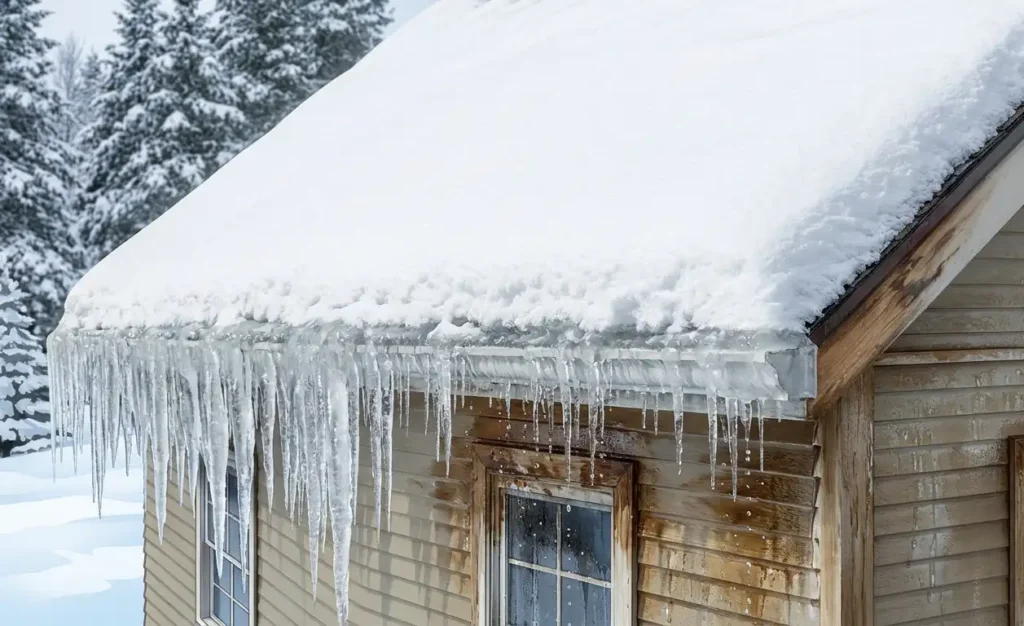
Understanding how roof heat cables prevent ice dams can help Fargo homeowners protect vulnerable roof areas during harsh winter weather. Heavy snowfall, fluctuating temperatures, and repeated freezing create conditions where melting snow can collect and refreeze along roof edges.
Roof heat cables provide targeted warmth to help melting snow drain through vulnerable areas. However, they work best as part of a broader winter protection strategy that addresses heat loss, attic ventilation, and roof drainage.
For homeowners in Fargo, West Fargo, and Moorhead, understanding when heat cables help and where they fall short supports better long-term roofing decisions.
Key Takeaways
- Heat cables help maintain drainage paths where melting snow might otherwise refreeze along roof edges.
- Proper attic insulation and ventilation address underlying temperature differences that contribute to recurring ice dams.
- Heat cables require suitable placement, electrical protection, and regular inspection for dependable winter performance.
- A professional roof assessment helps identify whether drainage improvements or broader roofing repairs are necessary.
How Heat Cables Reduce Ice Dam Risks on Fargo Roofs
Roof heat cables provide localized warmth in areas where melting snow commonly refreezes during winter. They help create drainage channels without needing to melt the entire snowpack covering a roof. Understanding their function helps Fargo-Moorhead homeowners recognize where these systems offer practical protection.
Keeps Meltwater Moving Along Cold Roof Edges
Snowmelt can refreeze when water reaches roof edges that remain colder than the upper roof surface. Properly positioned heating cables maintain narrow drainage paths through these vulnerable sections. This helps reduce water accumulation behind developing ice barriers during Fargo’s frequent winter temperature changes.
Homeowners noticing thick ice near their eaves should have the drainage conditions evaluated before considering cable placement.
Creates Drainage Channels Through Existing Ice-Prone Areas
Recurring ice accumulation can prevent melting snow from leaving the roof during warmer winter afternoons. Understanding how heat cables work on roofs explains how controlled warmth can maintain narrow openings through freezing areas. These openings give meltwater a route toward the roof edge instead of allowing it to collect behind ice.
For homeowners considering ice dam prevention buildup, identifying recurring ice locations helps determine which areas need attention.
Protects Gutters and Downspouts From Refreezing
Gutters and downspouts can freeze when meltwater enters drainage components exposed to prolonged subfreezing temperatures. Properly designed heat cables for roof edges and gutters can help maintain drainage through these connected areas. Keeping water moving reduces the likelihood of ice obstructing gutters and forcing water toward vulnerable roof edges.
Because keeping gutters clear for proper drainage also involves removing debris, homeowners should address blockages before winter conditions worsen.
Reduces Water Backup Near Roofing Materials
Ice barriers can trap meltwater against shingles, flashing, and other roof components during repeated freeze-thaw cycles. Targeted heating helps maintain drainage where refreezing would otherwise prevent water from leaving the roof. Reducing prolonged water backup lowers the risk of moisture finding openings beneath roofing materials.
If water stains appear indoors, repairing leaks caused by ice dams requires identifying the actual entry point rather than assuming cables will resolve existing damage.
Identifies Where Targeted Heating Makes Sense
Not every roof section experiences the same exposure to snow accumulation, heat loss, or freezing conditions. Roof heat cables for winter are generally most useful in specific locations with recurring drainage problems. Targeted placement helps homeowners avoid relying on unnecessary heating across otherwise functioning roof areas.
A professional evaluation can identify whether vulnerable valleys, eaves, or drainage transitions justify additional protection.
Additional Ice Dam Prevention Measures for Fargo Homes
Heat cables can help maintain drainage paths at vulnerable roof areas, but they do not address every condition that contributes to ice dams. Fargo-Moorhead homeowners should also consider attic insulation, air sealing, ventilation, and routine roof maintenance. Together, these measures help reduce uneven roof temperatures and manage winter moisture concerns.
Improve Attic Insulation to Reduce Heat Transfer
Insufficient attic insulation allows indoor heat to warm the roof deck and melt accumulated snow prematurely. Improving attic insulation helps limit unwanted heat transfer into the roofing system and reduces conditions that contribute to ice dams. A more consistent roof temperature reduces the likelihood of meltwater refreezing near colder eaves.
Homeowners should have insulation levels and coverage evaluated before treating recurring ice dams as a drainage problem alone.
Seal Air Leaks Before Adding More Insulation
Warm indoor air can escape through attic penetrations, ceiling gaps, and poorly sealed access openings. Sealing these pathways reduces the movement of heated air into cold attic spaces. This limits localized roof warming that may continue even when insulation levels appear adequate.
A qualified professional can assess attic air leakage while considering ventilation and combustion appliance safety requirements.
Maintain Ventilation That Supports Consistent Roof Temperatures
Blocked or poorly configured attic ventilation can contribute to uneven roof temperatures and moisture accumulation. Properly balanced intake and exhaust ventilation helps manage attic heat and moisture. Combined with insulation and air sealing, this supports more consistent roof conditions throughout North Dakota’s extended winter season.
Homeowners should avoid blocking soffit vents with insulation and have ventilation performance assessed before making changes.
Address Roof Problems That Heat Cables Cannot Fix
Persistent ice dams may indicate underlying insulation deficiencies, drainage restrictions, or deteriorating roofing components. Heat cables provide targeted drainage assistance but cannot correct every condition contributing to ice dams. They cannot repair damaged flashing, restore deteriorated shingles, or eliminate significant attic heat loss.
In Moorhead and Horace, checking your roof for winter damage can help identify problems requiring attention beyond supplemental heating.
Monitor Roof Conditions Throughout Winter
Winter storms can leave debris, displaced roofing materials, and accumulated snow around vulnerable drainage areas. Regular maintenance helps identify developing problems before repeated freezing increases the risk of water intrusion.
For Fargo-Moorhead homeowners, combining insulation, ventilation, and targeted heating with routine roof maintenance supports a more comprehensive approach to winter roof protection.
Protect Your Fargo Roof Before Ice Dams Cause Damage
Ice dams can develop quickly when heavy snow, heat loss, and freezing temperatures affect your roofing system. Allstar Construction has served the Fargo-Moorhead region since 1979, providing roofing expertise suited to challenging Upper Midwest weather.
A professional inspection can help determine whether your roof needs repairs, drainage improvements, or additional winter protection measures.
Contact Allstar Construction to schedule a roof assessment and request a free estimate for recommended roofing work. Understanding your roof’s condition before winter helps you make informed decisions about long-term protection.
Frequently Asked Questions
Do roof heat cables completely prevent ice dams?
No. Heat cables help maintain drainage channels in selected freezing areas, but they cannot eliminate every ice dam. Insulation, air sealing, ventilation, and proper roof drainage remain important for reducing recurring winter problems.
When should homeowners install roof heat cables?
Heat cables are generally best installed before significant snowfall and freezing conditions arrive. A qualified professional should evaluate roof conditions, electrical requirements, and manufacturer instructions before installation to ensure appropriate placement and safe operation.
Can heat cables damage roof shingles?
Improper installation, incompatible products, or incorrect fastening methods can damage roofing materials. Listed products installed according to manufacturer instructions help reduce these risks. Professional evaluation is particularly important for specialty roofing materials and complex roof designs.
Are heat cables better than attic insulation for preventing ice dams?
Neither approach serves the same purpose. Insulation and air sealing help prevent excessive roof warming, while heat cables maintain localized drainage paths. Addressing underlying heat loss generally provides better long-term prevention than relying on cables alone.